
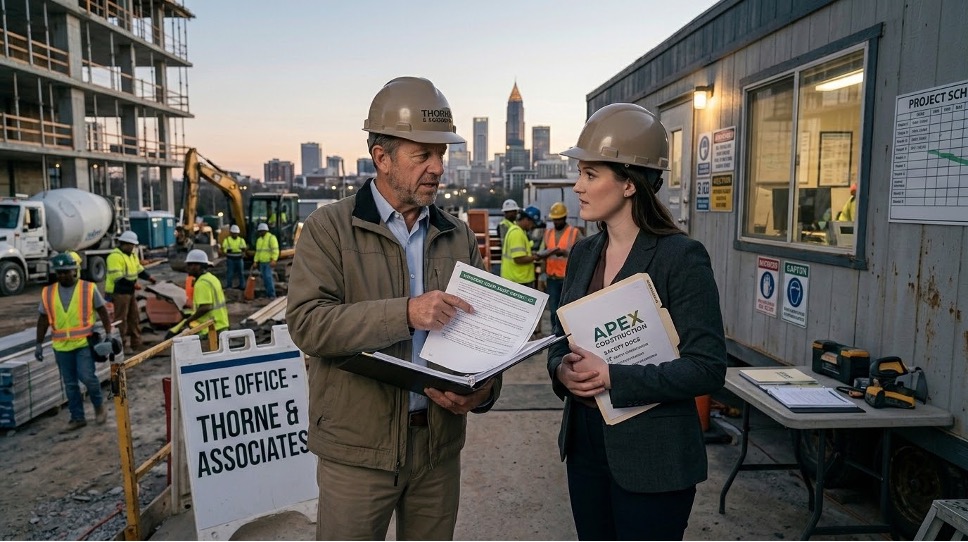
Common Construction Workers’ Compensation Mistakes That Increase Costs
Construction companies face some of the highest workers’ compensation costs in the commercial insurance market. While injury exposure naturally contributes to higher premiums, many contractors unknowingly increase their workers’ compensation problems through avoidable operational mistakes.
For insurance brokers, identifying these issues early can significantly improve underwriting outcomes and help clients avoid expensive long-term complications.
In today’s insurance environment, strong operational discipline is often just as important as claims history itself.
Poor Payroll Documentation Creates Audit Problems
One of the most common issues construction companies face involves payroll reporting.
Contractors frequently manage multiple crews, changing job sites, subcontractors, overtime exposure and seasonal labor fluctuations.
Without organized payroll documentation, workers’ compensation audits can become extremely difficult.
Misclassified payroll, uninsured subcontractors, and inaccurate job descriptions often result in substantial additional premiums after audit review.
For many contractors, these surprises create major financial strain during renewal periods.
Inconsistent Safety Procedures Increase Claims Frequency
Many construction businesses rely heavily on field supervisors to manage workplace safety. However, when safety expectations vary between crews or job sites, claims frequency often increases.
Construction companies lacking formal safety processes are generally viewed as higher underwriting risks.
Even smaller recurring injuries can significantly impact future workers’ compensation pricing over time.
Delayed Claims Reporting Makes Losses Worse
Construction injuries often happen in fast-moving environments where production schedules take priority.
Unfortunately, delayed injury reporting can substantially increase claim severity. Minor injuries may worsen when treatment is postponed, documentation becomes inconsistent, or communication breaks down between supervisors and employees.
Businesses that implement immediate reporting procedures and organized claims communication generally experience better underwriting outcomes long-term.
This is one reason many brokers focus heavily on claims management processes when advising construction clients.
Rapid Growth Can Create Administrative Problems
Many construction companies experience payroll growth quickly when projects expand or new contracts are awarded.
Growth itself is not the problem. The issue occurs when administrative systems fail to keep pace.
Construction firms growing rapidly often struggle with:
- Employee onboarding
- Payroll separation
- Safety documentation
- HR compliance
- Workers’ compensation reporting
As operational complexity increases, underwriting concerns typically increase as well.
How PEO Programs May Help Construction Companies
PEO workers’ compensation programs may help contractors improve operational consistency through centralized administrative support.
Many PEOs assist construction businesses with:
- Payroll processing
- HR compliance
- Claims coordination
- Employee onboarding
- Safety procedures
- Return-to-work management
For contractors managing multiple crews or operating across several states, these systems can create stronger internal organization and improved underwriting perception over time.
Construction workers’ compensation problems are often driven by more than injury exposure alone. Payroll inconsistencies, delayed reporting, weak safety procedures, and administrative disorganization frequently contribute to rising premiums and difficult renewals.
For brokers, helping contractors strengthen operational controls can significantly improve long-term workers’ compensation stability.
PEO workers’ compensation programs may provide additional support for construction companies seeking more organized systems and broader underwriting solutions in an increasingly difficult market.