
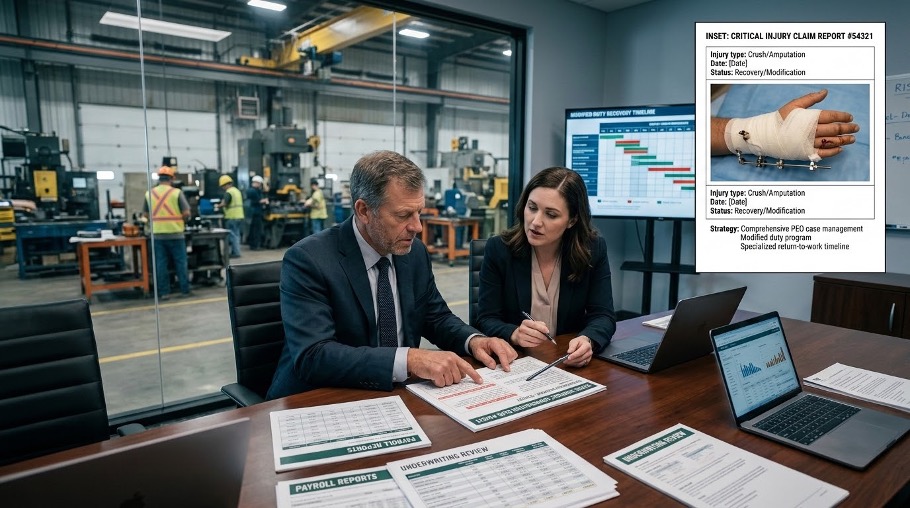
Recovering After Large Workers’ Compensation Claims with PEO Support
A single severe workers’ compensation claim can change the entire insurance outlook for a business.
One catastrophic injury may lead to significant premium increases, carrier restrictions, reduced underwriting flexibility, and long-term operational pressure. For many employers, the financial impact extends far beyond the immediate claim itself.
Insurance brokers working with high-risk industries understand how quickly a large loss can destabilize an otherwise healthy account.
This is one reason many businesses begin exploring PEO workers’ compensation programs after experiencing severe claims activity.
Large Claims Affect More Than Premiums
Many employers initially focus on the immediate financial cost of a large workers’ compensation claim. However, the long-term underwriting impact is often even more significant.
Severe losses can influence:
- Experience modification rates
- Carrier appetite
- Renewal pricing
- Deductible requirements
- Audit scrutiny
- Underwriting restrictions
Businesses operating in construction, manufacturing, staffing, trucking, and contracting industries are especially vulnerable because injury severity potential is already elevated within these sectors.
Even one catastrophic loss can affect renewals for years.
Underwriters Evaluate Operational Response
After a major claim occurs, underwriters closely examine how the business responded operationally.
Underwriters frequently review, safety training programs, incident reporting procedure, supervisor accountability, OSHA compliance, return-to-work processes and employee communication systems
Businesses demonstrating organized response procedures are generally viewed more favorably than employers lacking structured claims management systems.
This is why operational consistency becomes critical following severe losses.
Claims Recovery Requires Long-Term Strategy
Many employers make the mistake of focusing only on immediate premium reduction after a large claim.
In reality, recovery usually requires broader operational improvements involving:
- Safety accountability
- Injury prevention
- Claims communication
- Employee training
- Payroll organization
- HR compliance
Without structural improvements, businesses often continue experiencing underwriting instability long after the original loss occurs.
Experienced brokers typically focus on helping clients improve overall risk management — not simply finding another insurance quote.
How PEO Programs May Support Recovery
PEO workers’ compensation programs may provide businesses with operational infrastructure designed to improve long-term claims management and underwriting consistency.
Many PEOs assist employers with:
- Payroll administration
- Claims coordination
- Safety procedures
- Employee onboarding
- HR compliance
- Return-to-work management
For businesses recovering from major claims activity, these systems can help create stronger operational controls moving forward.
Improved organization often supports better underwriting discussions during future renewals.
Why Safety Culture Matters After Severe Losses
Large workers’ compensation claims frequently expose deeper operational weaknesses.
Businesses that successfully recover often treat severe claims as turning points for:
- Improving communication
- Strengthening accountability
- Enhancing training
- Formalizing reporting systems
- Reinforcing safety expectations
Underwriters pay close attention to whether management takes meaningful corrective action after major incidents occur.
Companies demonstrating proactive operational improvement generally position themselves more favorably over time.
Large workers’ compensation claims can create long-term challenges for businesses operating in high-risk industries. However, recovery is possible when employers focus on operational consistency, claims management, and proactive safety improvements.
For brokers, PEO workers’ compensation programs may provide valuable alternatives for businesses seeking additional administrative support and long-term underwriting stability after severe losses.
The strongest recovery strategies combine insurance planning with meaningful operational discipline designed to reduce future claims exposure.