
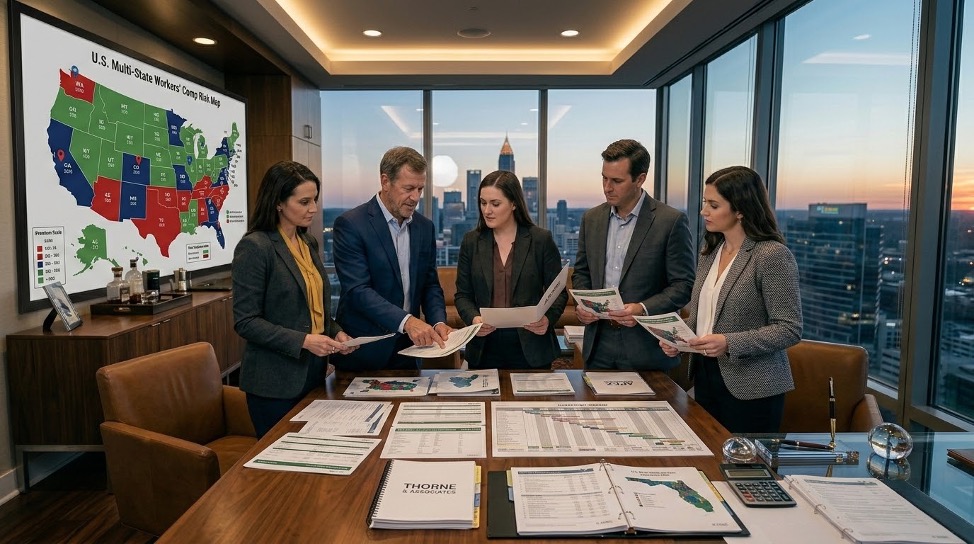
Multi-State Workers’ Compensation Solutions Through PEO Programs
Managing workers’ compensation coverage across multiple states has become increasingly complicated for growing businesses.
Different state laws, varying payroll requirements, changing employee classifications, and inconsistent compliance standards can create significant administrative pressure for employers operating across state lines. For insurance brokers, multi-state accounts often require far more coordination and underwriting oversight than single-location businesses.
As operations expand geographically, many employers begin exploring PEO workers’ compensation programs as a way to centralize administrative processes and improve operational consistency.
Why Multi-State Workers’ Compensation Is More Complex
Every state maintains its own workers’ compensation regulations, classifications, reporting requirements, and compliance standards.
Businesses operating in multiple states may face challenges involving:
- Payroll allocation
- State-specific filings
- Employee classifications
- Coverage requirements
- Audit procedures
- Claims handling differences
Even businesses with strong internal systems can struggle to maintain consistency as operations grow across multiple jurisdictions.
For rapidly expanding companies, workers’ compensation administration can quickly become overwhelming.
Payroll Growth Often Increases Compliance Risk
Many multi-state employers are growing businesses managing distributed teams, remote operations, or multiple physical locations.
As payroll expands, employers frequently encounter a multitude of issues such as reporting inconsistencies, classification confusion, delayed claims reporting, incomplete documentation and audit complications
Underwriters closely evaluate how effectively businesses manage these operational complexities.
When administrative controls appear disorganized, underwriting flexibility often becomes more limited.
Why Brokers Explore PEO Solutions for Multi-State Clients
PEO workers’ compensation programs may help create more centralized administrative systems for employers operating across multiple states.
Many PEOs provide support with:
- Payroll administration
- HR compliance
- Employee onboarding
- Claims coordination
- Reporting procedures
- Safety management systems
For businesses operating across several jurisdictions, consistency becomes one of the largest operational advantages.
Standardized procedures often improve both internal organization and underwriting perception over time.
Claims Management Becomes More Important at Scale
As companies grow geographically, claims management can become increasingly difficult to coordinate.
Inconsistent reporting procedures between locations may delay injury response and increase claim severity unnecessarily. Different supervisors may also handle workplace injuries differently, creating additional underwriting concerns.
Many employers exploring PEO programs are seeking operational structure as much as insurance access.
Organized reporting systems, centralized communication, and consistent return-to-work procedures can significantly improve long-term claims outcomes.
Industries Commonly Managing Multi-State Exposure
Multi-state workers’ compensation challenges are especially common within:
- Construction
- Trucking
- Staffing
- Manufacturing
- Hospitality
- Logistics
- Seasonal labor operations
These industries frequently experience fluctuating payrolls, distributed workforces, and changing job site conditions that complicate underwriting.
Brokers serving these sectors often require broader placement strategies than traditional single-state accounts.
Multi-state workers’ compensation administration is becoming increasingly difficult as businesses expand operations across multiple jurisdictions and underwriting standards continue tightening.
For brokers, understanding how PEO workers’ compensation programs support administrative consistency can create valuable solutions for employers struggling with payroll complexity, compliance management, and claims coordination.
The strongest long-term strategies combine insurance placement with operational systems designed to support sustainable growth.